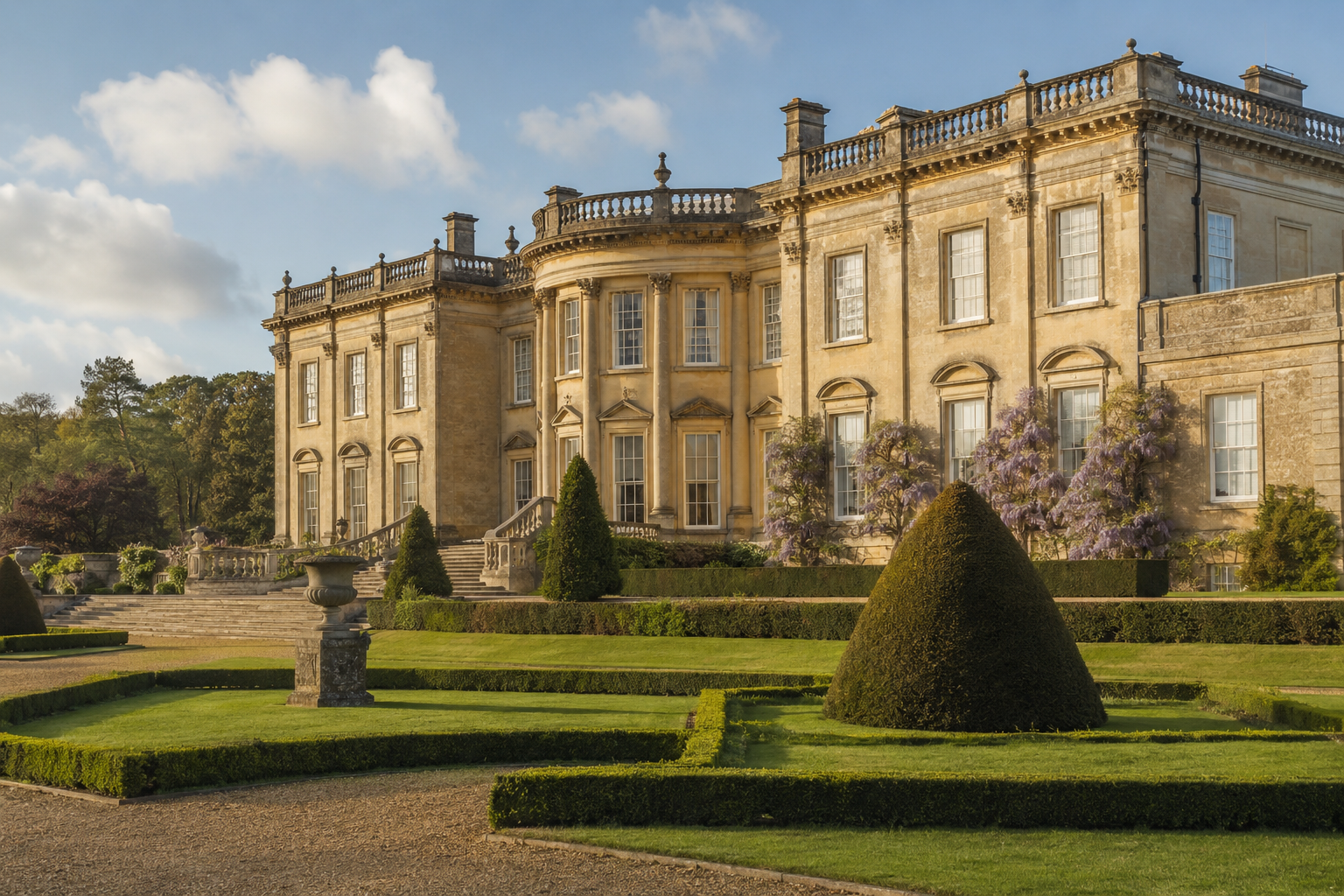
Two of the most photographed country houses in England sit within a quarter of an hour of Bakewell. They face each other across a small piece of Derbyshire countryside that contains barely anything else of note — some fields, a couple of pubs, the river Wye — and most weekenders try to do both in a single day. This is the wrong way to do them.
Chatsworth and Haddon are very different houses with very different visits, and trying to compress them into a Saturday is the surest way to remember neither of them. The proper approach from a Bakewell cottage is to take a separate morning for each, with a quiet day in between to let the impressions settle.
Chatsworth, Honestly
Chatsworth is the bigger visit by an order of magnitude. The house itself is enormous, the grounds are vast, and the entire estate has a quality of being polished to within an inch of its life. Anyone who has read even a little about the place will know that the house has been the seat of the Cavendish family for more than four centuries, and that scale tells in every room.
The honest advice is to arrive when it opens, walk briskly through the state rooms in the first hour before they fill up, and then spend the rest of the morning in the gardens. The gardens are the secret pleasure of Chatsworth — the cascade, the rock garden, the kitchen plot. They are quieter than the house and they reward slowness in a way the great rooms do not.
Lunch at Chatsworth, if you must eat there, is fine but expensive. The better plan is to drive ten minutes back into Bakewell, eat a pudding for a fraction of the price, and walk it off along the river.
Haddon, Quietly
Haddon Hall is the opposite house. It is small, it is dim, it is mediaeval and it is somehow more affecting than its larger neighbour for being so. Where Chatsworth has been continuously updated, Haddon was effectively left alone for three centuries and then sensitively restored in the twentieth. The result is a house that feels closer to its origins than almost any comparable property in the country.
The visit is short. An hour and a half is generous. The pleasure is in the small details — the kitchen, the chapel, the long gallery with its uneven floor — rather than in the headline rooms. Children who have been dragged round Chatsworth tend, surprisingly, to prefer Haddon. It feels more like a house someone might actually have lived in.
The Quiet Day Between
The reason to space the two houses across separate days is that they are in competition for the same kind of attention. Both ask you to imagine the lives of people who lived there centuries ago. Doing both in a single afternoon means you do the imagining badly for both. The brain dulls.
Spend the day between the two on something different. A walk along the Wye, a slow morning in the Bakewell market square, a drive up to one of the high points above the town to look down on the valley. By the time you reach the second house you will be properly ready to look at it.
What to Skip
You do not have to do every room at either house. The state rooms at Chatsworth are remarkable but cumulative; after the fifth one they begin to blur. Skip the last two and go to the garden instead. At Haddon, the long gallery is the room that matters; if you only had twenty minutes, spend them there. Country houses, like cathedrals, reward the visitor who looks at one thing for longer rather than at everything for less.