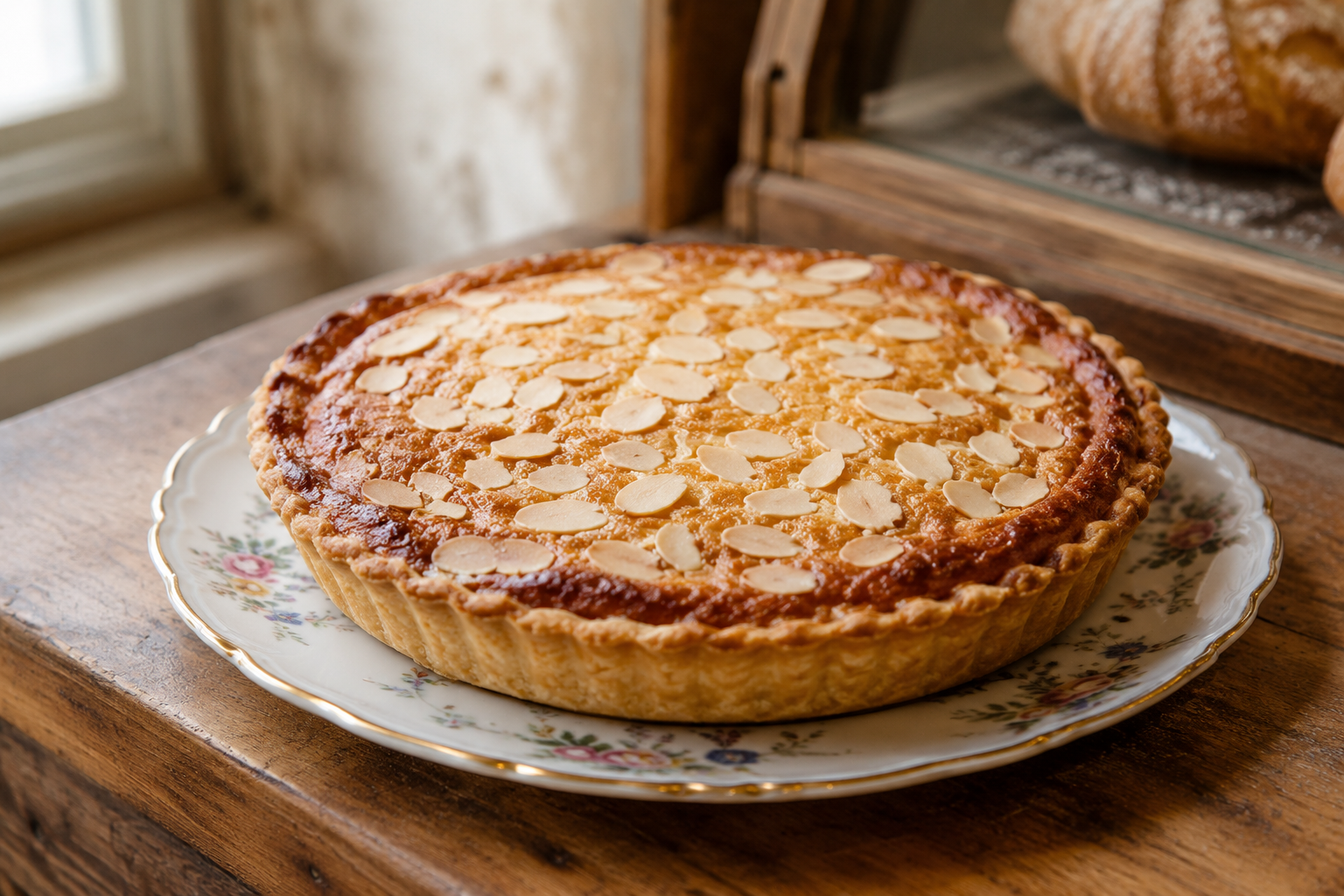
Most visitors arrive in Bakewell looking for a Bakewell tart, and most leave a little confused. The tart they have in mind — a layer of jam, a layer of frangipane, a thin white icing on top with a glace cherry — turns out not to be the local thing at all. The local thing is the pudding, which is older, looser, and rather harder to describe.
The Bakewell pudding is what you should eat if you only have one round of cake in the town. The story is that the pudding was invented by accident in a Bakewell inn kitchen in the 1860s, when a cook misread a recipe and produced something quite different from the intended jam tart. The accident stuck. Several local bakeries still make it from variations of the original recipe, and they will all tell you firmly that theirs is the authentic one.
The Three Pudding Shops
There are three rival pudding shops in Bakewell, all within a short walk of the square. Each claims to hold the original recipe. None of them is wrong, and none of them is exactly right; the recipe has drifted between them over a century and a half, and the puddings are recognisably the same dish made by three slightly different hands.
The honest answer is that they are all good, in slightly different ways. One is a little richer; one has the firmer pastry; one is the smallest. Most locals have a quiet preference and will not name it. Visitors are better off buying a small pudding from each, eating them side by side in a field beside the river, and deciding for themselves.
What Else Is Local
The pudding is the famous thing but it is not the only food that belongs here. Derbyshire oatcakes are a soft, savoury, slightly tangy oatcake that is more like a pancake than the dry biscuit version made over the border; they are eaten hot with cheese and bacon and they are extremely good for a Sunday breakfast in a cottage. They turn up at most local butchers and bakers.
Locally cured ham, often from pigs reared on small Derbyshire farms, is the other thing worth seeking out. The texture is different from supermarket ham — firmer, less wet, more flavoured. A small piece of it on a slice of fresh bread with a smear of mustard is one of the better lunches you can put together in a cottage kitchen.
Cheese, Briefly
Stilton is not made in Bakewell — it comes from a little further south — but Derbyshire cheese-mongers stock the best of it, and a wedge of properly mature Stilton with a pudding for the savoury course is the right way to end a meal in a Peak District cottage in November. A reasonable cheese shop on a Saturday morning is one of the small pleasures of a Bakewell weekend.
If Stilton is too rich, there is good local Cheddar, a soft white Derbyshire cheese that is rarely found outside the county, and a slightly nutty hard cheese made just outside Buxton. Most of these things are stocked by the cheese shop in the square. Ask. The staff are friendly and they know what is good this week.
The Pudding, Taken Home
The pudding travels surprisingly well. Wrapped in greaseproof paper and kept in the bottom of a cool bag, a small Bakewell pudding will survive the drive home and reheat acceptably in a low oven the next morning. This is one of the few souvenirs that does not feel like a souvenir. It feels like you have brought back lunch.