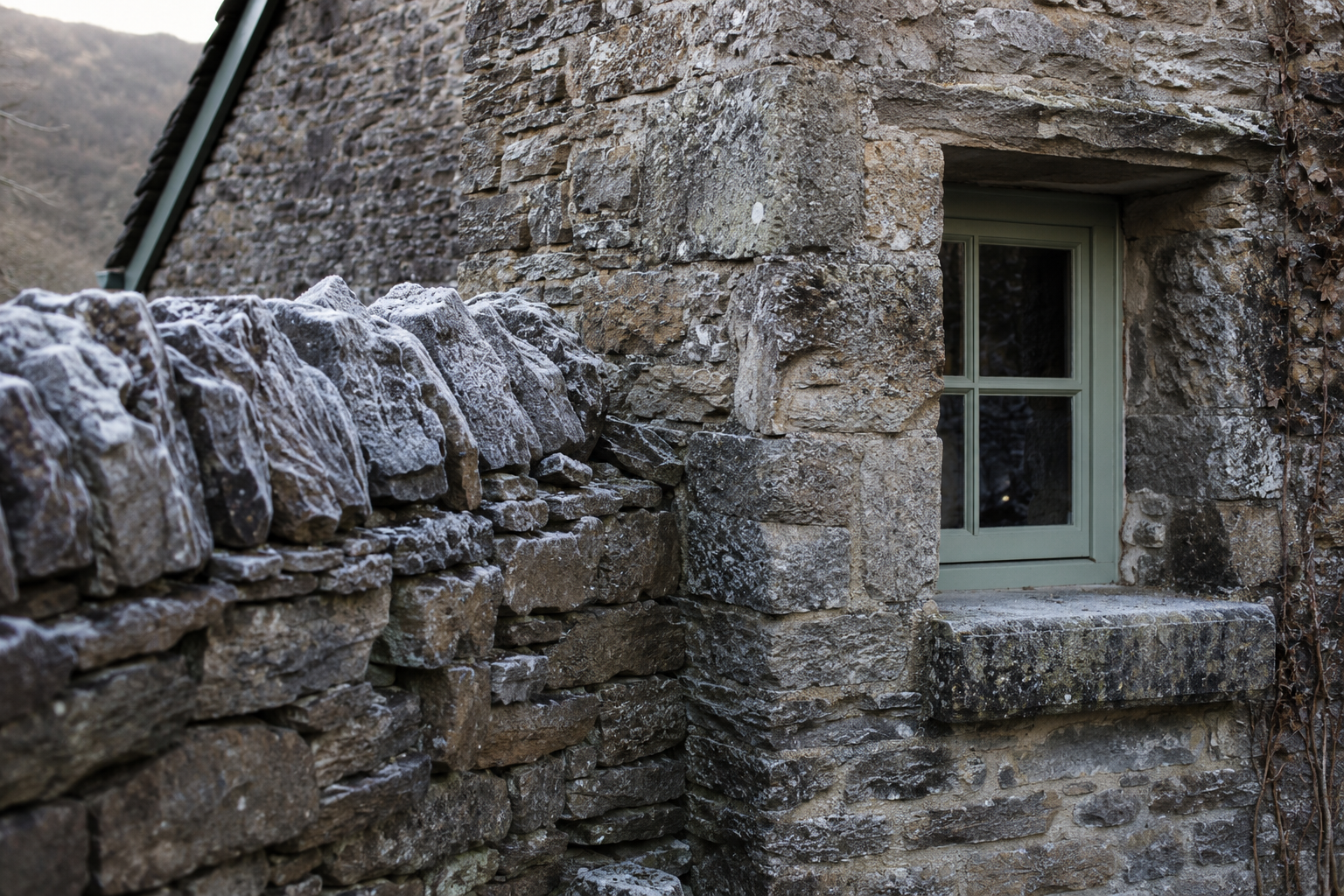
Anyone who has stepped from a hot August lane into the front room of an old Derbyshire cottage knows what stone does to a temperature. The drop is immediate and almost shocking. A house built two hundred years ago of locally quarried gritstone, with walls eighteen inches thick at the base, is essentially a small cave with windows.
This is excellent in July. It is more complicated in February. The same wall that cools you so pleasingly in summer takes a long time to warm in winter, and the cottage that felt like an oasis in the heat now wants its woodburner on by four in the afternoon. This is the bargain of the Derbyshire holiday cottage: it was designed for the weather it stands in, but the weather has more than one season.
What the Builders Knew
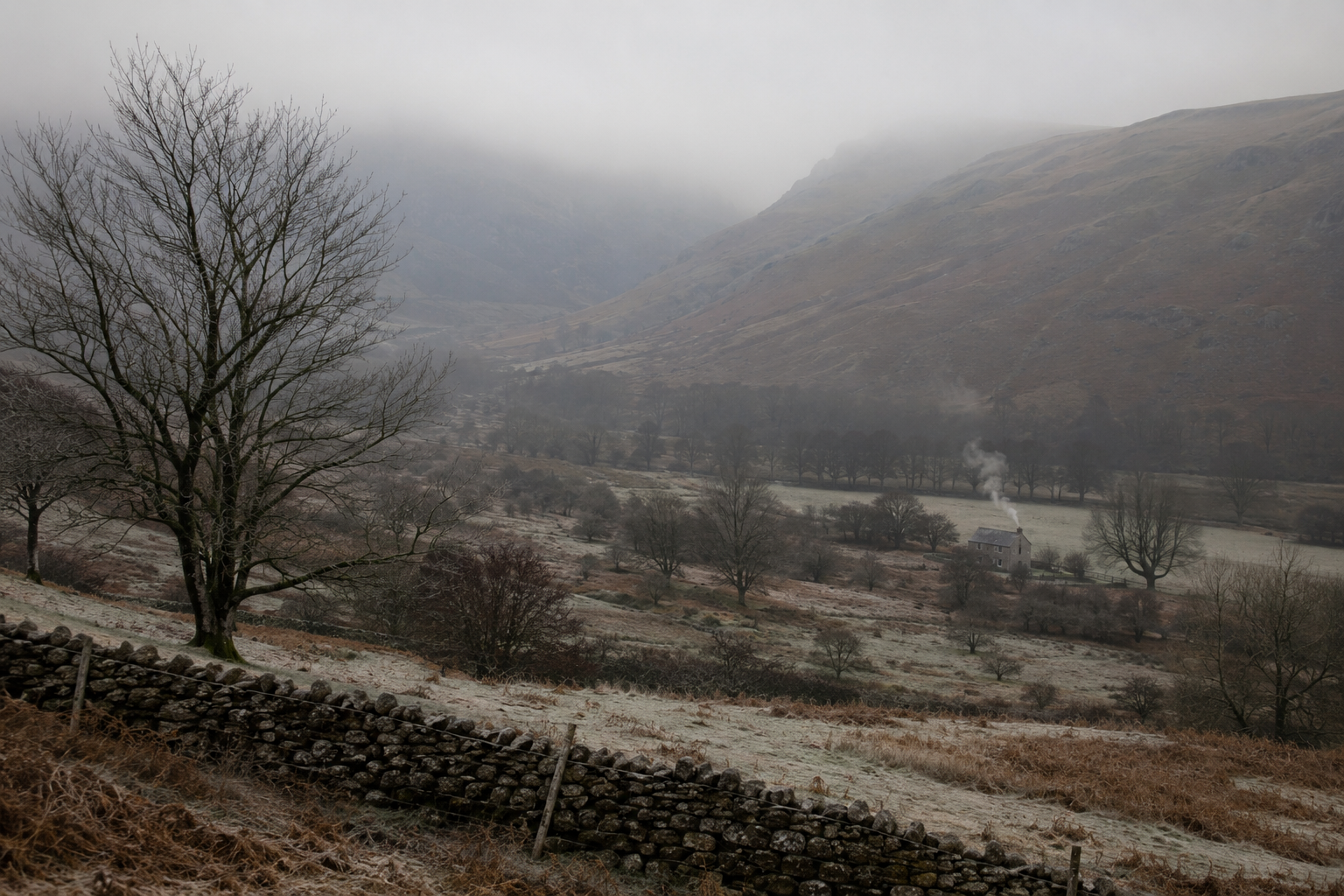
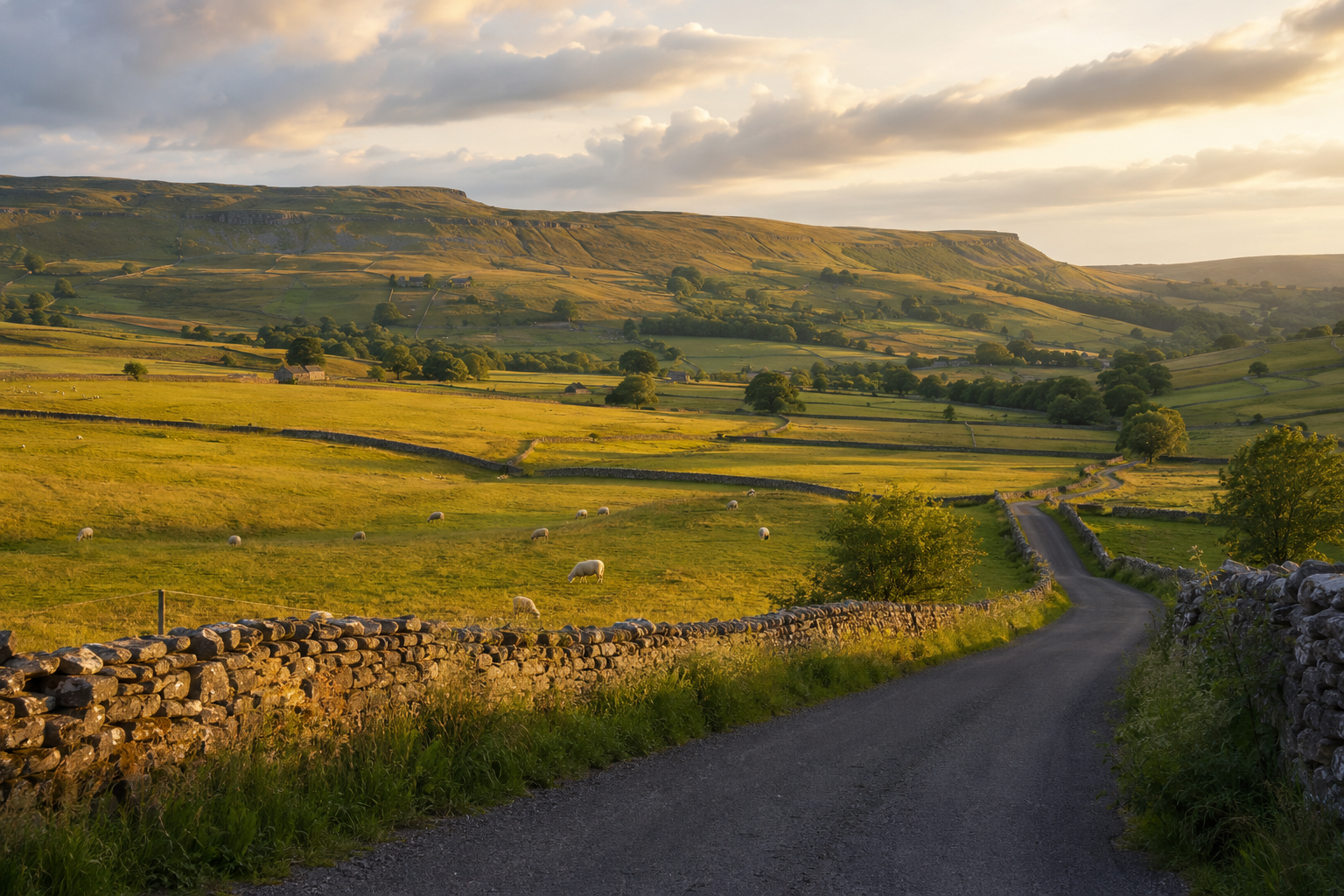
The masons who built these houses in the eighteenth and nineteenth centuries were not designing for tourists. They were designing for the families who would live in them year-round, often working on the land. The walls had to keep the heat out in summer and in in winter. The windows had to be small enough to limit draughts. The roofs had to shed the kind of horizontal rain that a Pennine winter sends sideways across the valleys.
You can see the logic of this in any old village in the Derbyshire Dales, where rows of stone cottages sit oriented to the prevailing weather rather than to the road. The doors face away from the wind. The smaller windows face north. The chimneys are placed where the warm air will rise through the centre of the house. None of this was decoration. It was the only way to keep a family warm.
The Summer Advantage
In a heatwave, the Derbyshire stone cottage is unbeatable. The thermal mass of the walls is enormous; the inside of the house can sit five or six degrees cooler than the outside for hours after the heat of the afternoon has built up. Modern brick or timber-framed houses lose this fight badly. By six in the evening they are stifling. A stone cottage at six in the evening is still cool.
This is why so many of these houses still feel like the right buildings to be in during a hot summer week. They do exactly what they were built to do, with no need for air conditioning, blackout blinds or any of the apparatus of modern thermal management. The walls do it all.
The Winter Trade-Off
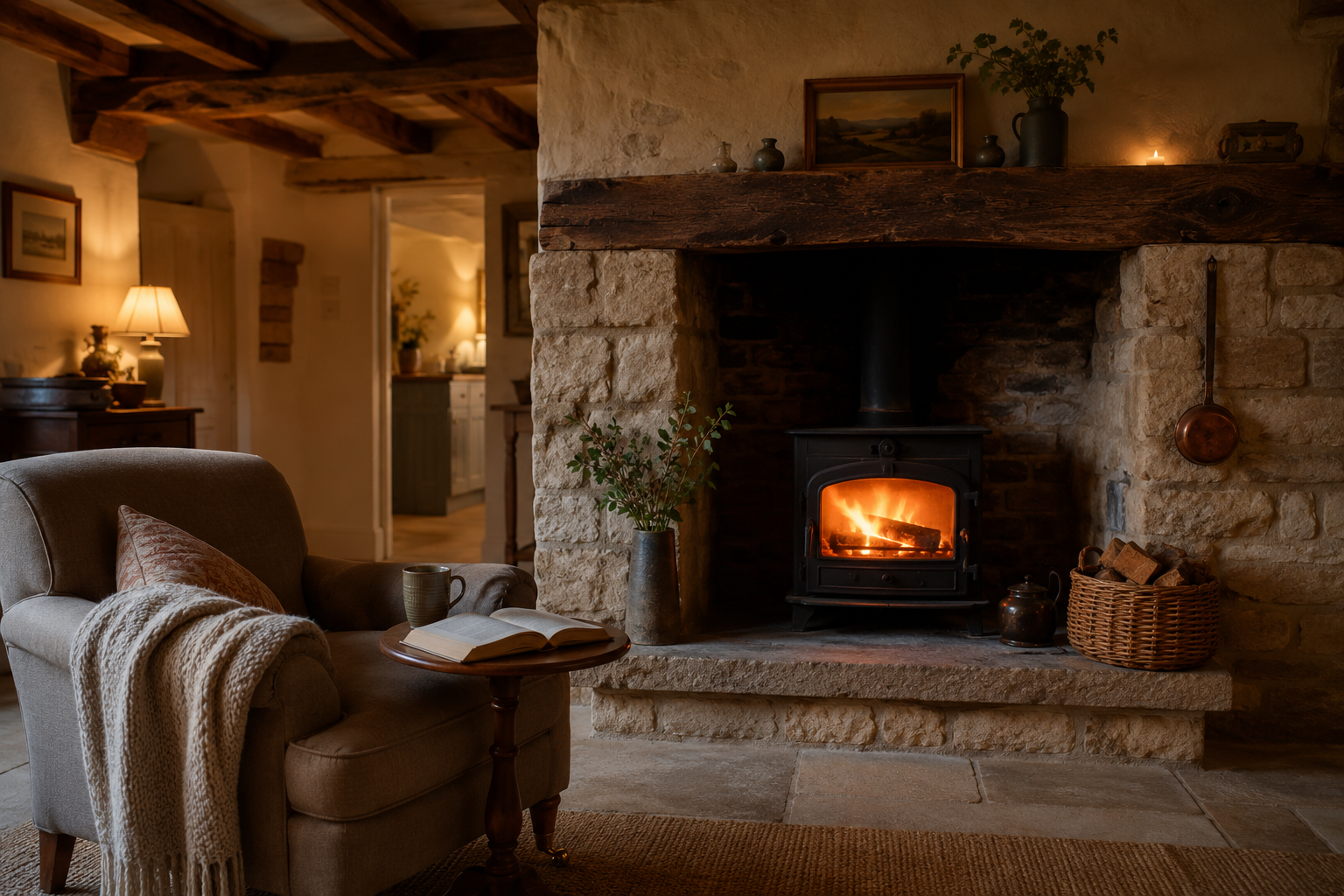
The winter version is the trade. A stone cottage that has been empty for three days in January will take the first day of your stay to come up to temperature. The walls have a lot of cold stored in them, and a woodburner alone is not enough — you need the central heating on quietly in the background, ideally turned on the day before you arrive if the owner will do it.
The good cottages know this. They preheat the building. They leave the heating on a low setting throughout the winter even when the cottage is empty. They tell you where the thermostat is and how to use it. The less good ones turn everything off between bookings and let you discover the cold on your first night. Ask, when you book in winter, whether the heating will be on before you arrive. The answer is genuinely diagnostic.
The Acoustic Bonus
A thing that gets less attention is what stone does to sound. Eighteen inches of gritstone absorbs almost everything — rain on the windows is muffled, traffic on the lane is barely audible, and conversations from the next room reach you only as a vague sense that someone is talking. The cottage is quiet in a way that newer buildings are not. For a holiday week, this is often the thing you remember.
The same applies to the noise you make. You can stack the dishwasher, run the shower, watch a film and put logs on the fire without disturbing anyone else in the house. The cottage has its own internal acoustic, a slow, soft register that takes a couple of days to notice and then becomes the texture of the week.